Bring The Balance
for the Canadian Video Game Museum
Teaching gamers about the intricacies of crafting difficulty balance from a developer's perspective.
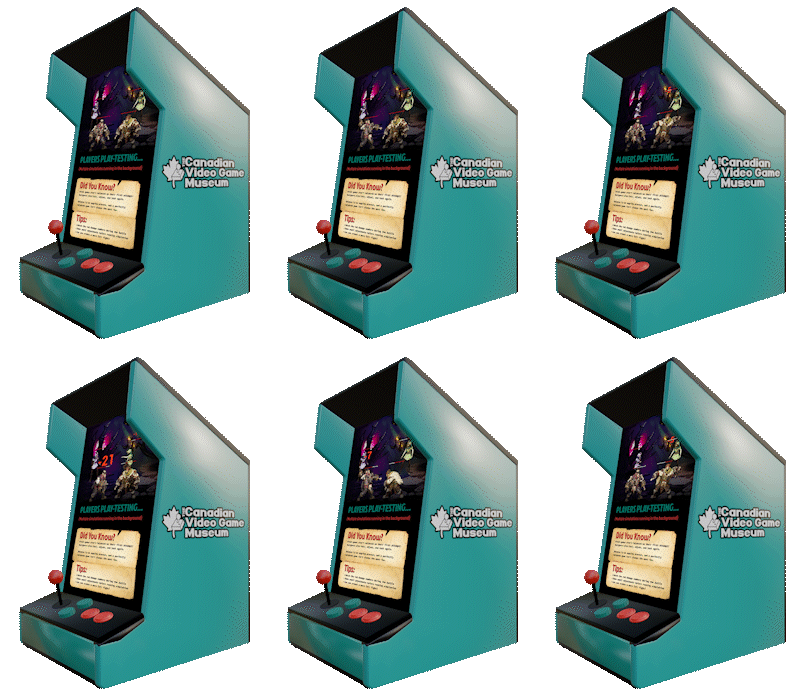
Working with a 3-month time limit, my team of 6 was tasked with creating an exhibit for the Canadian Video Game Museum that teaches the public about the difficulties developers face when trying to balance difficulty in their games. The client was an experienced developer and avid gamer, so they knew what would work and what would be an epic fail.
Each of us set learning goals at the start of the project so that we could come out of this with a new set of skills. For myself, I wanted to become more versed in the digital product pipeline in a management role and to learn how to create user interfaces for games.
PROBLEM STATEMENT:
"How might we challenge an experienced gamer's assumptions about balancing within the first 10 seconds?"
Product Trailer Created by Jesse Lockwood
Level 1-1
Our first task was to research the intricacies of making games feel fair and not frustrating. We found that Healthy Game Balance is a mix of math and psychology. Games rely on slight, deliberate power asymmetries and character archetypes rather than identical matchups to maintain meaningful strategic choices. They need rigorous, data-driven iteration and playtesting, not the developer's gut feeling.
To further our research, we took a tour of Science World in downtown Vancouver and studied exhibits as well as visitors' interactions to understand what keeps people engaged and having fun while learning something new.
Mini-boss Stage
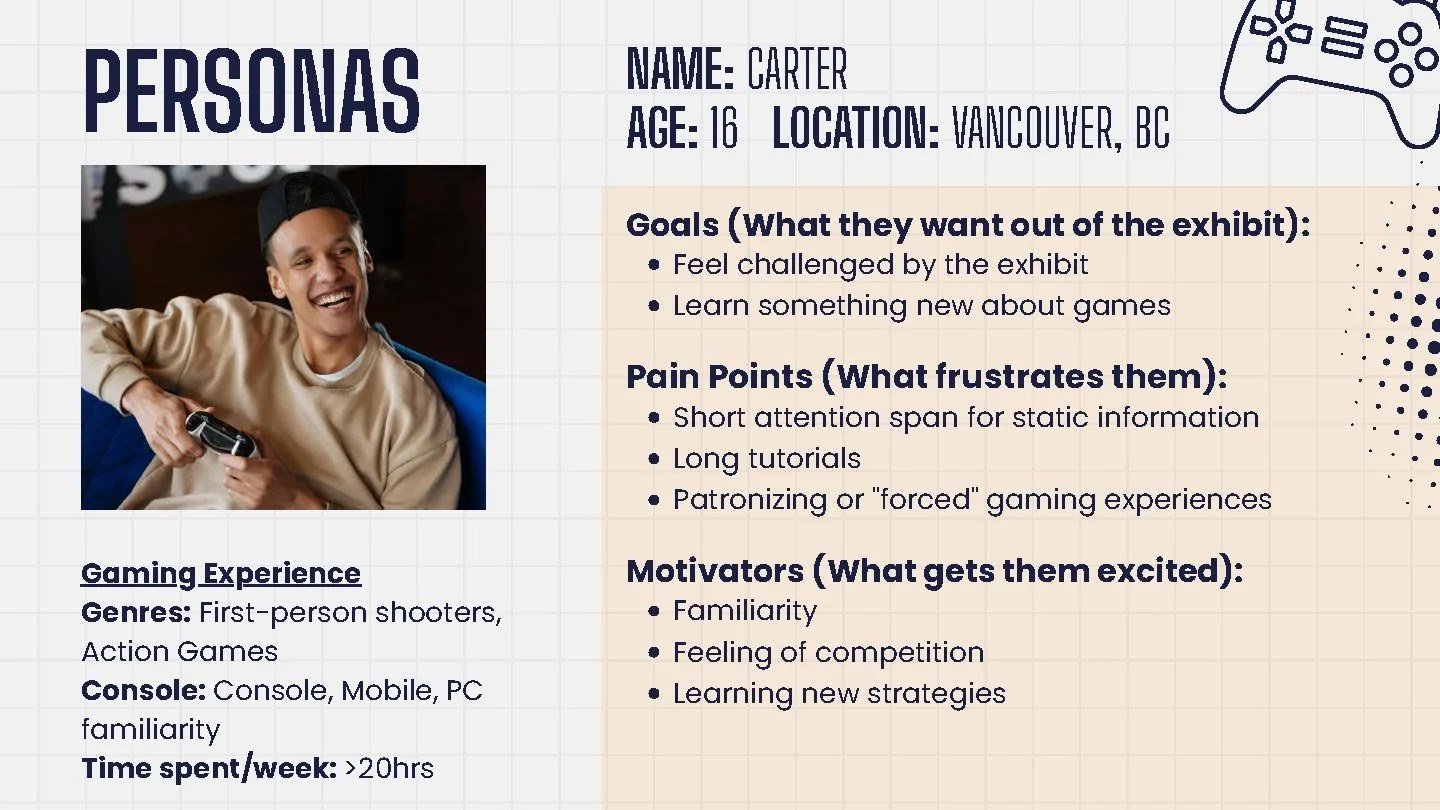
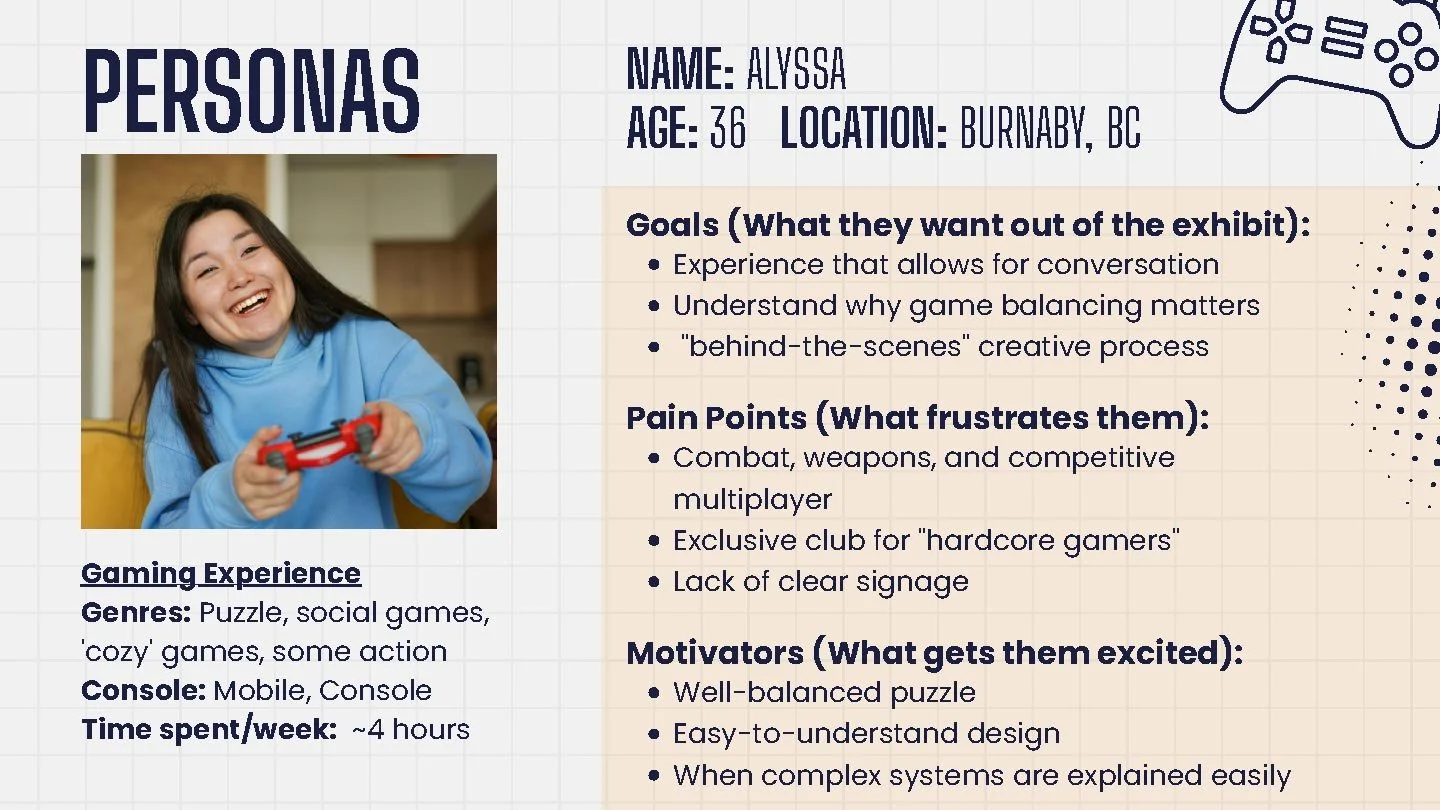
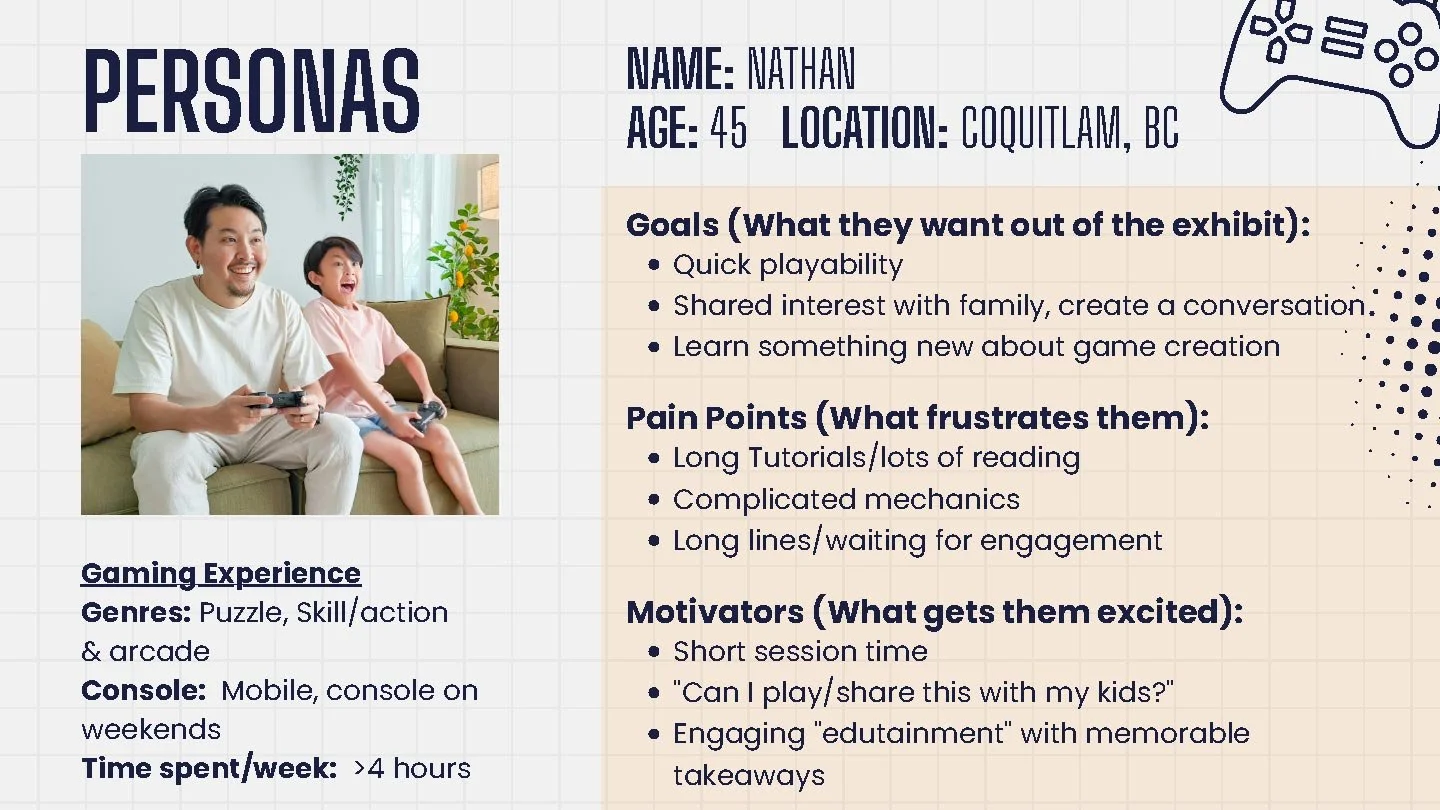
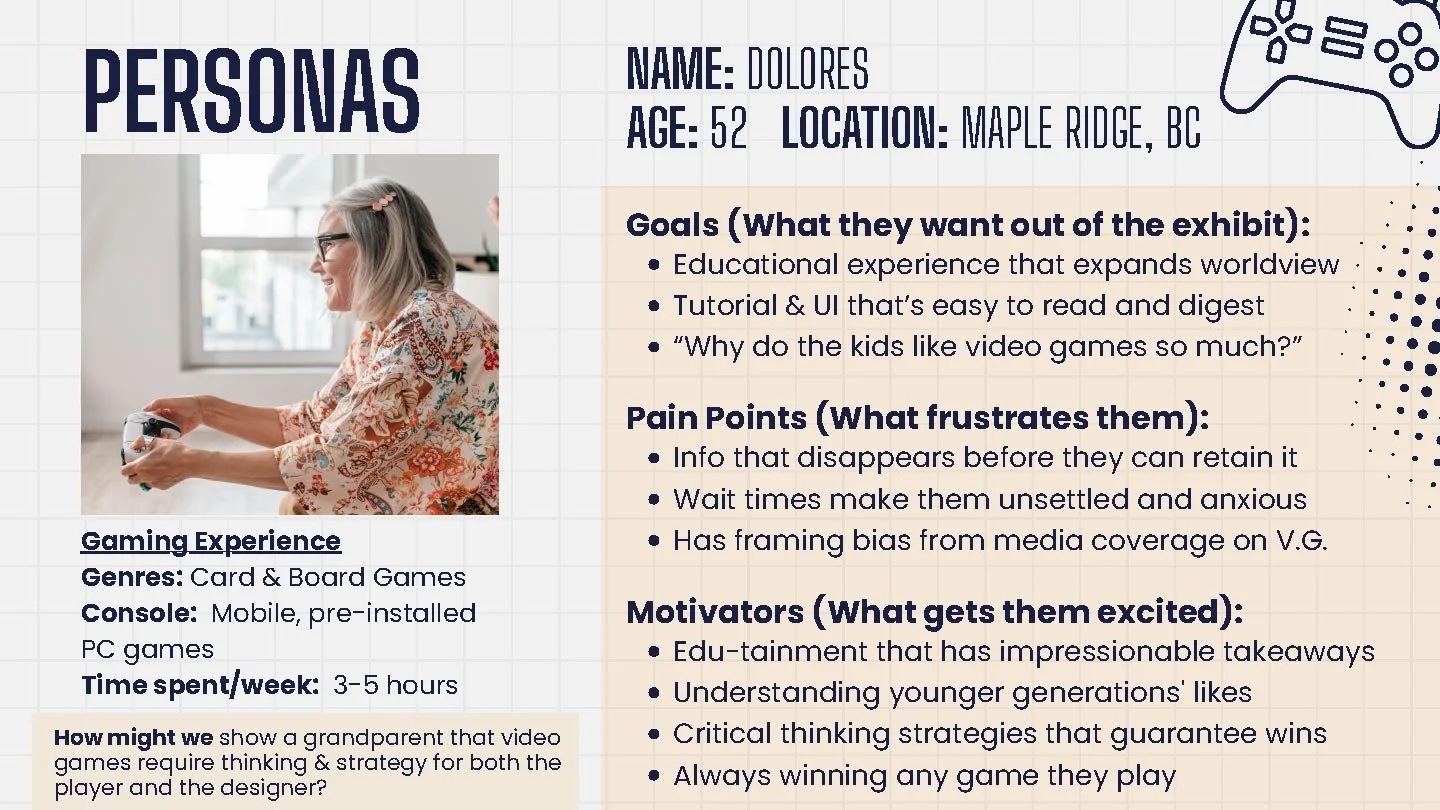
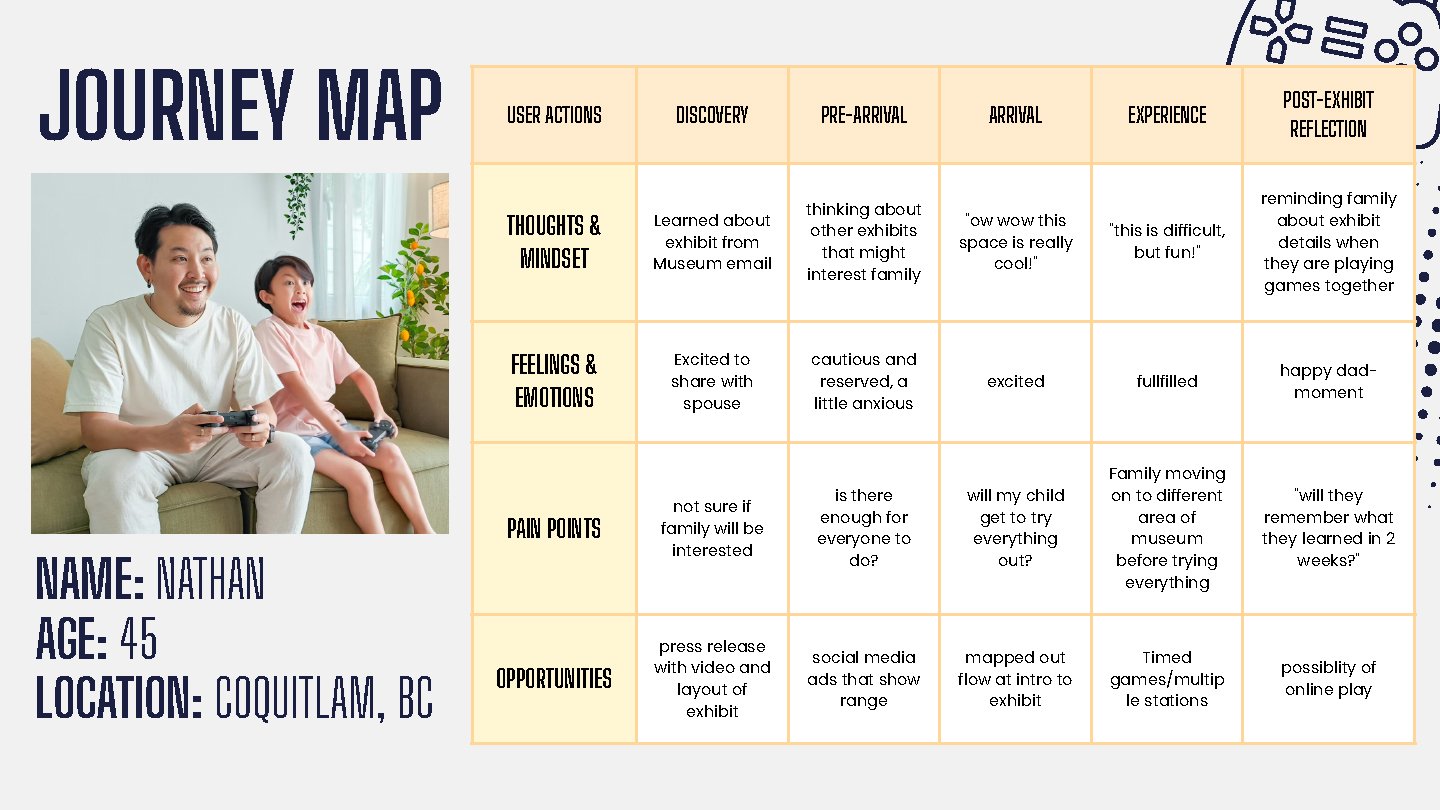
Next, the Project Manager and I created 3 personas across a wide range of gamers. From 16-year-olds who live and breathe competitive games to 45-year-old dads who know games but don't play as much as they would like. I created user journeys for them, and I decided that since the client is preparing to exhibit at the Museum of Vancouver, we might need a 4th persona that represented the non-gamers who might wander into the exhibit. The research led me to a grandmother who plays competitive card games but has no video game experience.
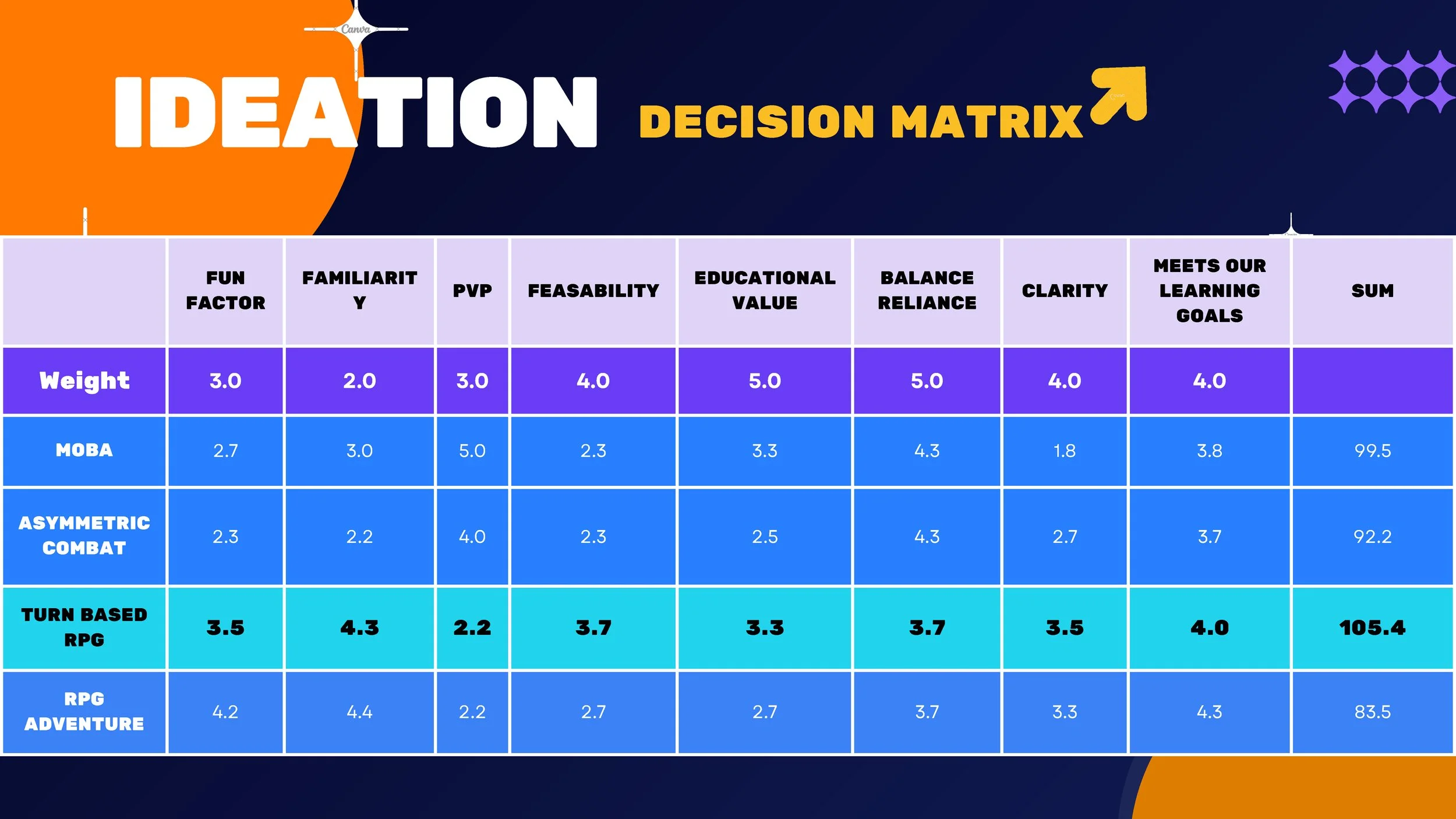
From there, each team member pitched 3 ideas to the group, each with a core loop and basic mechanics. We had just about every genre covered, from racing games to multiplayer online battle arena games to role-playing games. After breaking down their values to the personas with a decision matrix, we decided a turn-based RPG inside a meta-game setting would be the most viable approach within the 3-5 minute window we set for the entire experience. The player would not control the characters' actions directly, but they would adjust their stats and run a game simulation to see the results of the changes they made.
Finding the Perfect Combo
For our First playtest, we vibe-coded different versions of our core loop to a/b test the experience and see what resonated with users. The data and interviews told us that interactive sliders created the best reactions from players and kept them wanting to tweak and adjust until they got it right. We learned that too many options gave the players a higher cognitive load and ultimately led to confusion and frustration.
"Not obvious that you can interact with the slider; not exactly sure what I’m balancing - player or enemy?"
-anonymous tester comment
Level 2-2
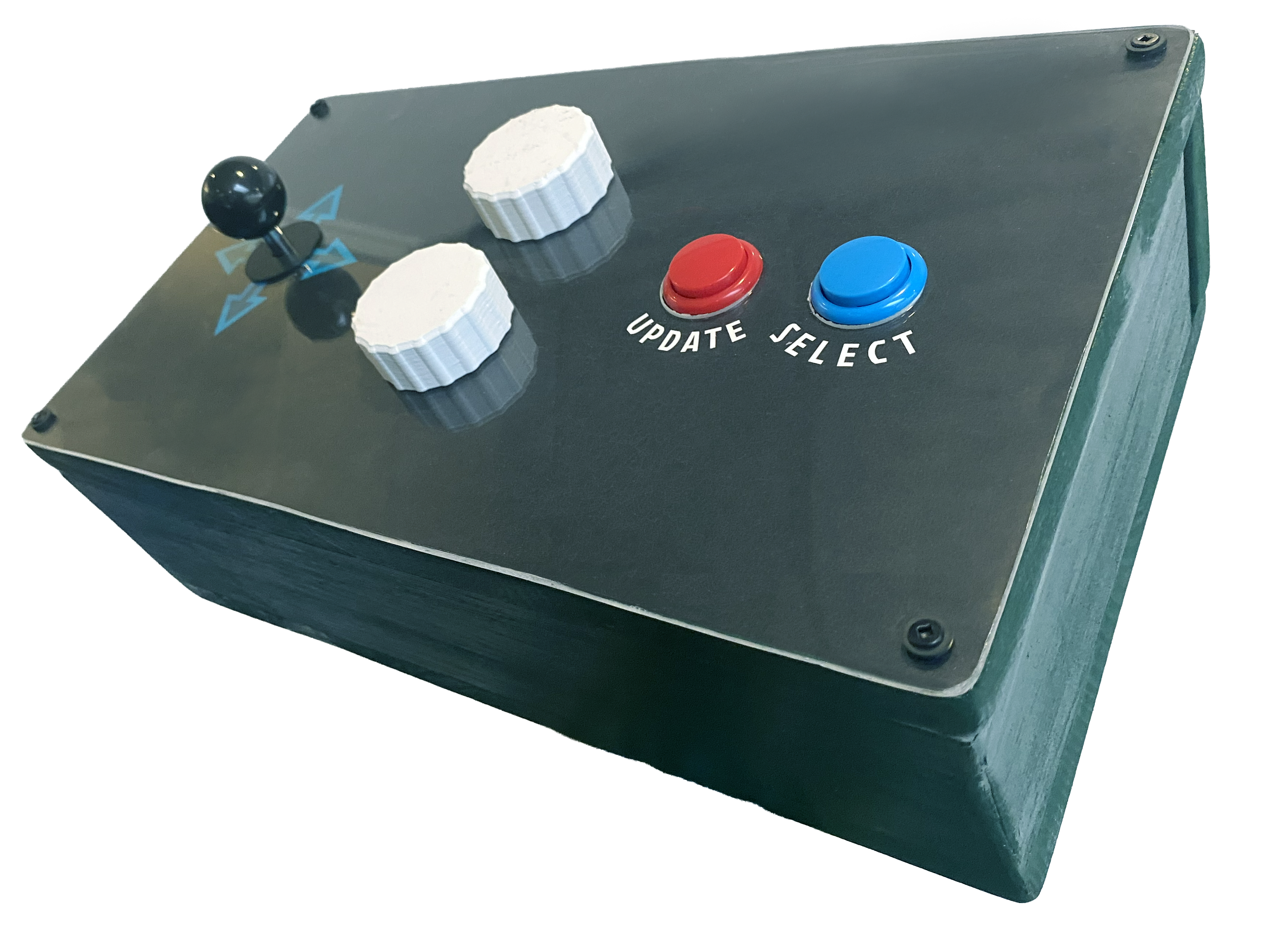
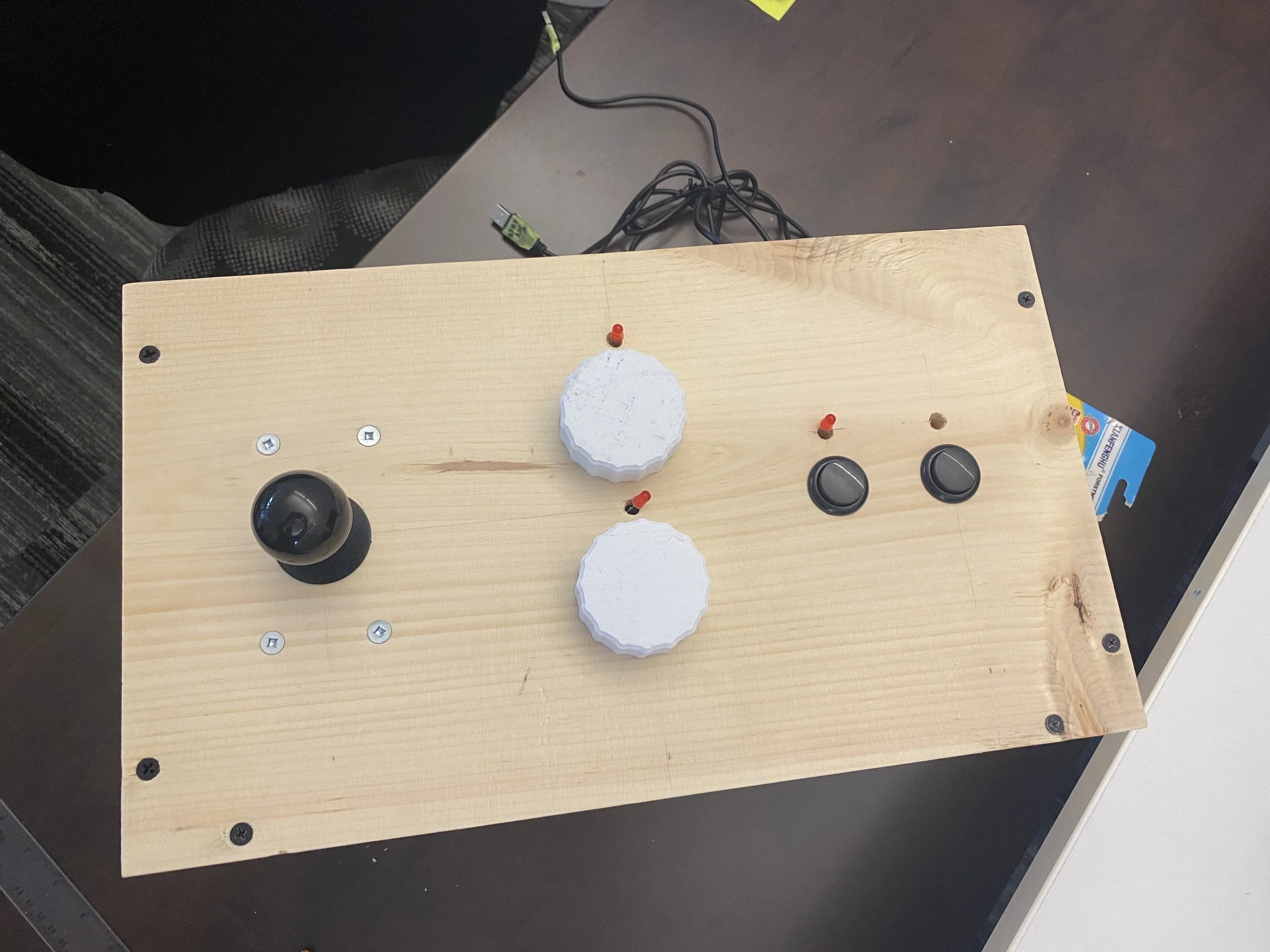
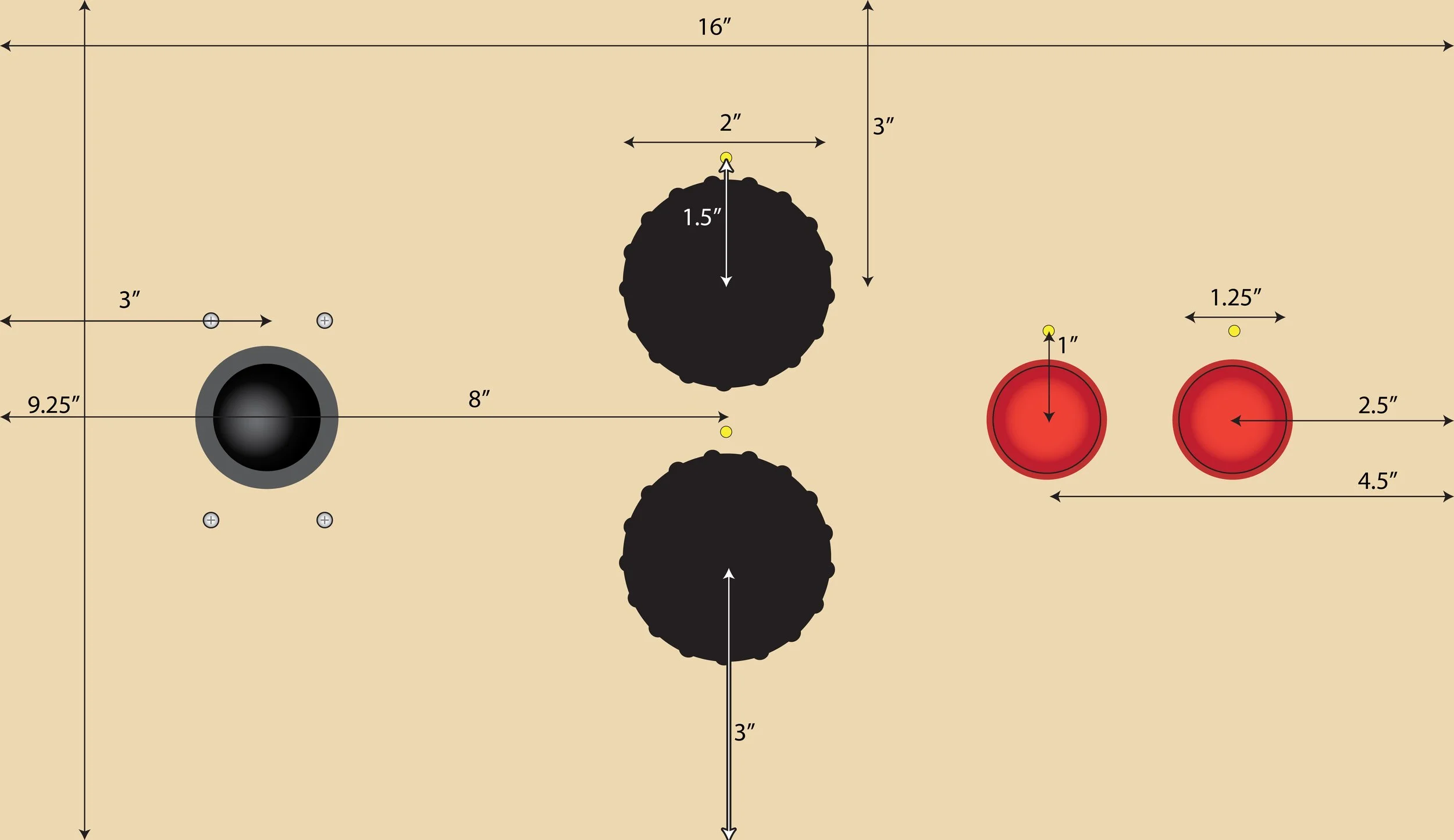
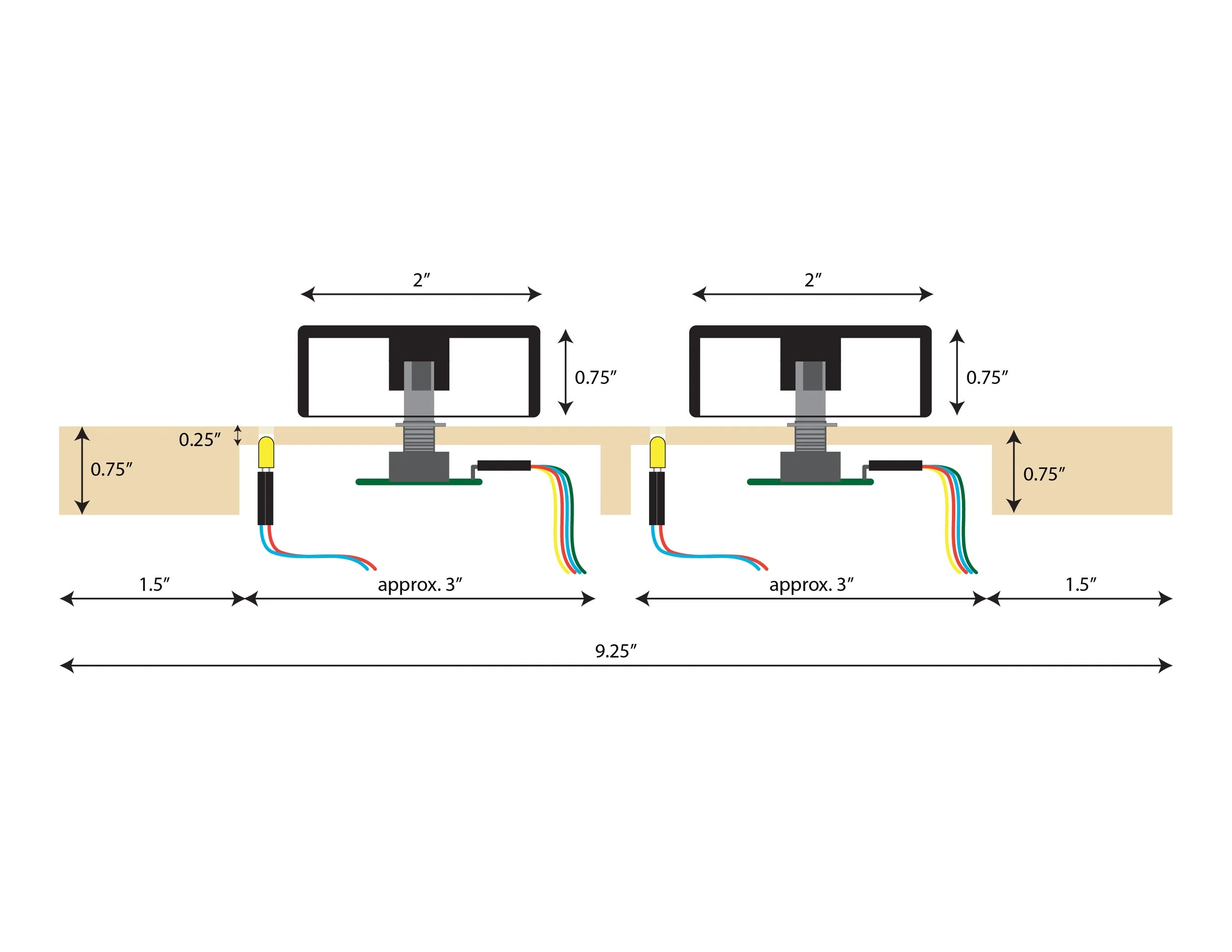
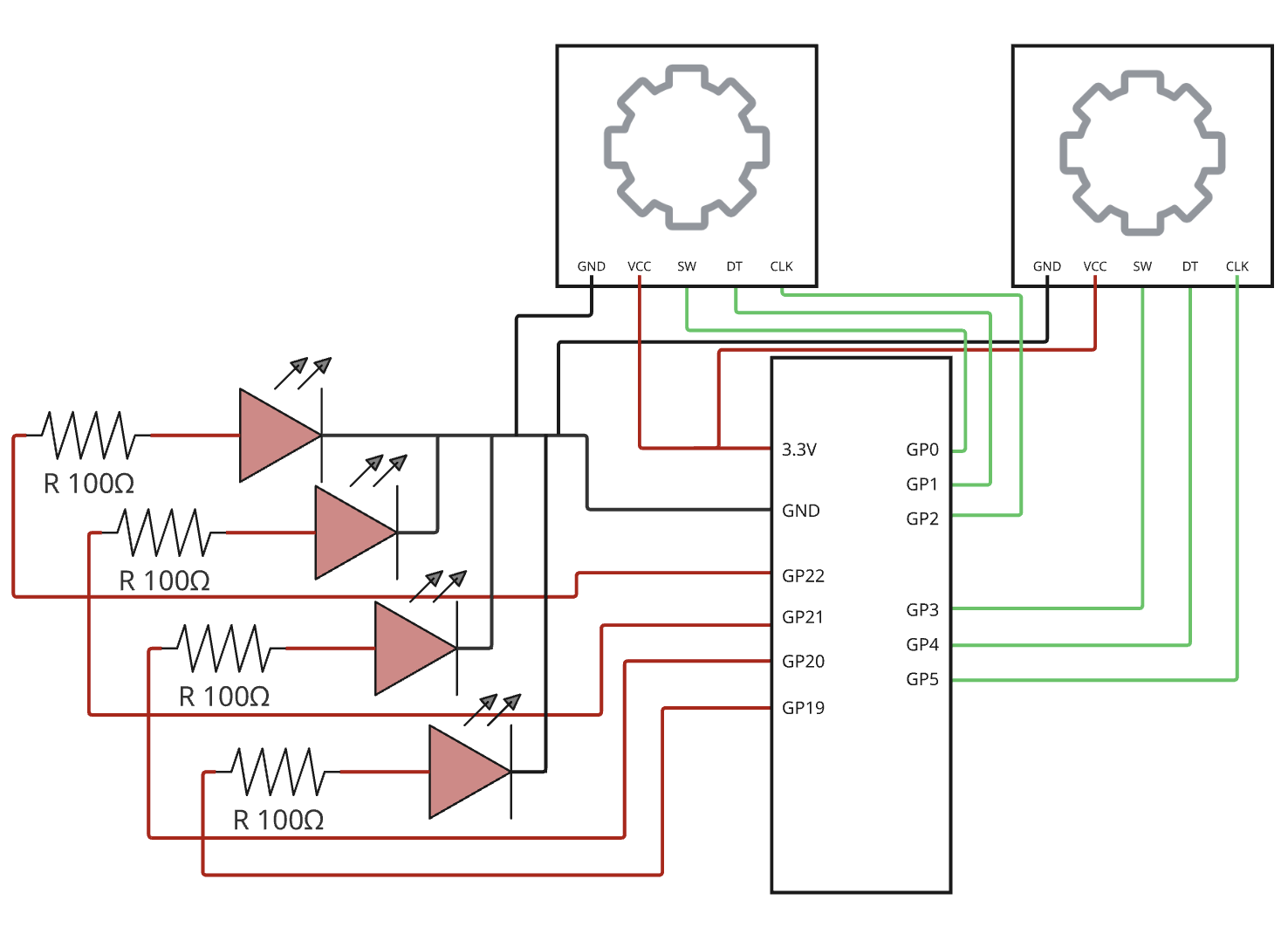
Armed with this new information, we wanted to level up the exhibit. We looked into dual-screen output with touch controls, but without that tangible feeling we witnessed at Science World, we realized this would not keep visitors engaged. We decided to go with a vertical screen to conserve real estate and make it visually interesting. To enhance the interactive experience, I used my experience creating arcade cabinets alongside the project manager's expertise in electrical engineering to create a custom arcade-style controller with rotary dials to adjust the stat values and LEDs to enhance the Tutorial.
By the time we got to the second user test, the developers had the basics of the game fleshed out with 2d sprites, and we had a prototype controller to gauge interest. The initial reactions were good, but the game lacked animation, sound, and a fleshed-out UI to keep the users engaged. The new controller piqued interest, and we got great feedback from an exhibit designer at Science World to swap out our rotary dials for potentiometers for better accuracy.
"I think you guys make the knobs so sensitive that a small turn would cause a huge change in the stats."
-anonymous tester comment
UI Development Progress
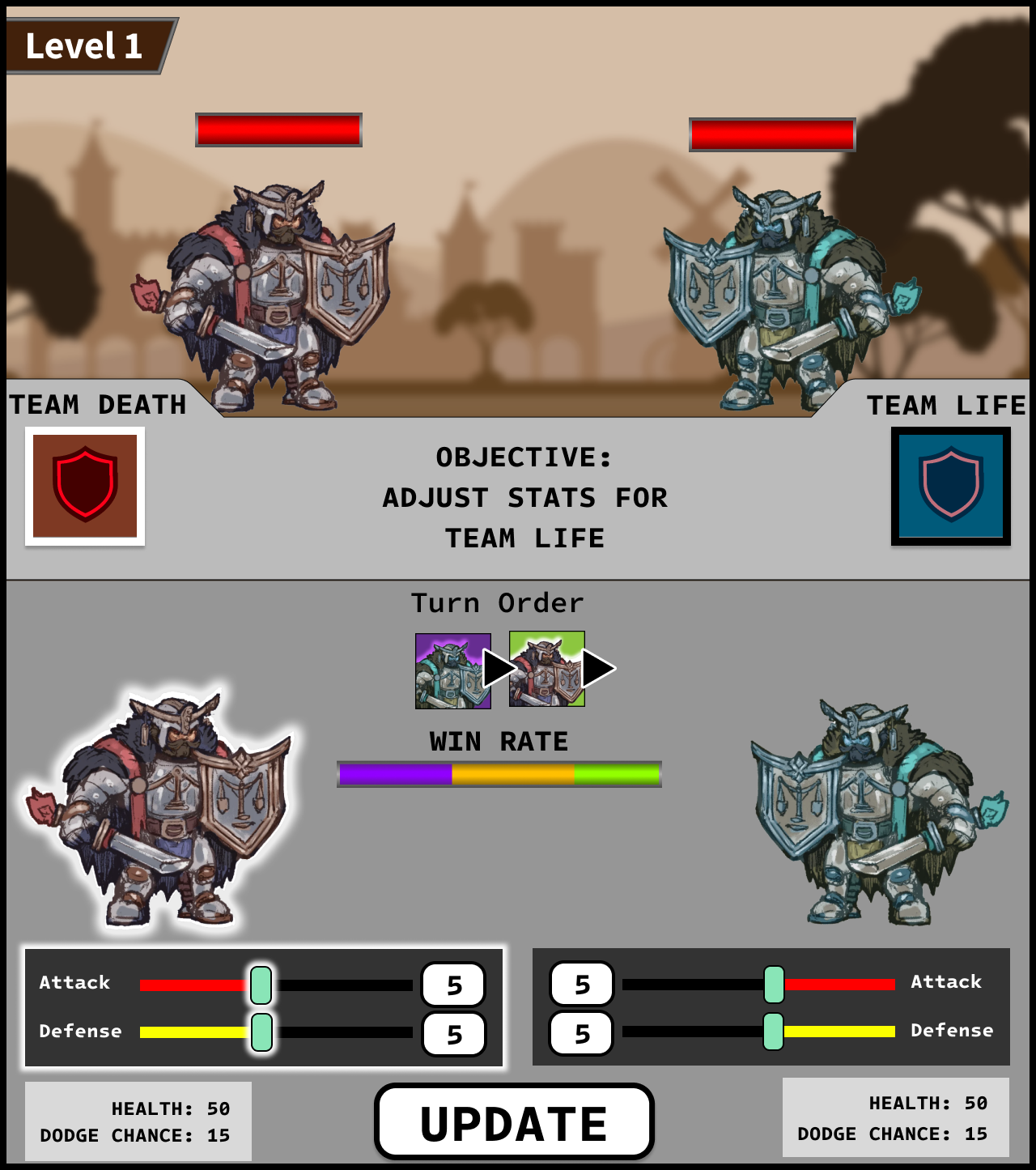
Level 1 Wireframe
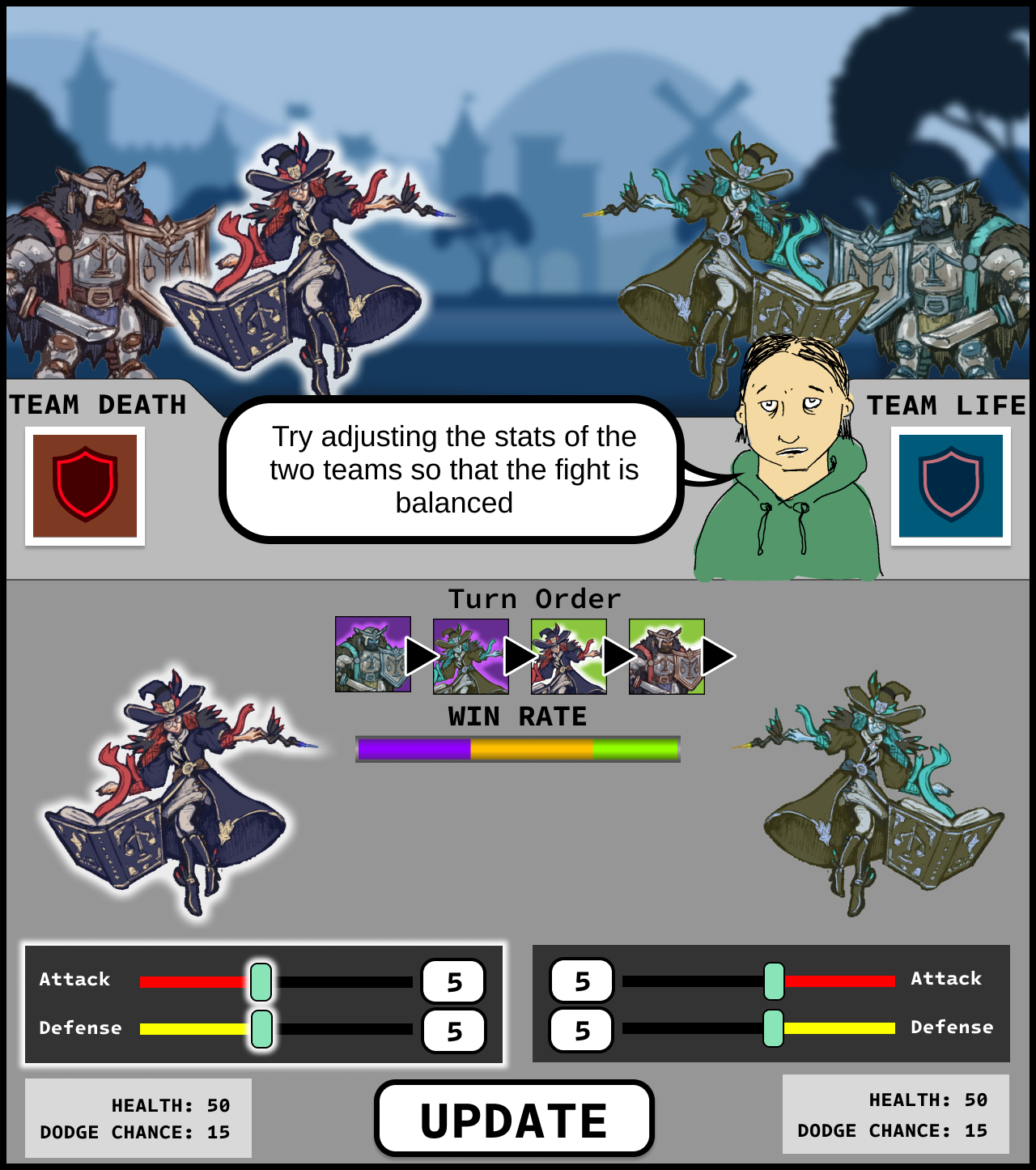
Level 2 Wireframe (tutorial)
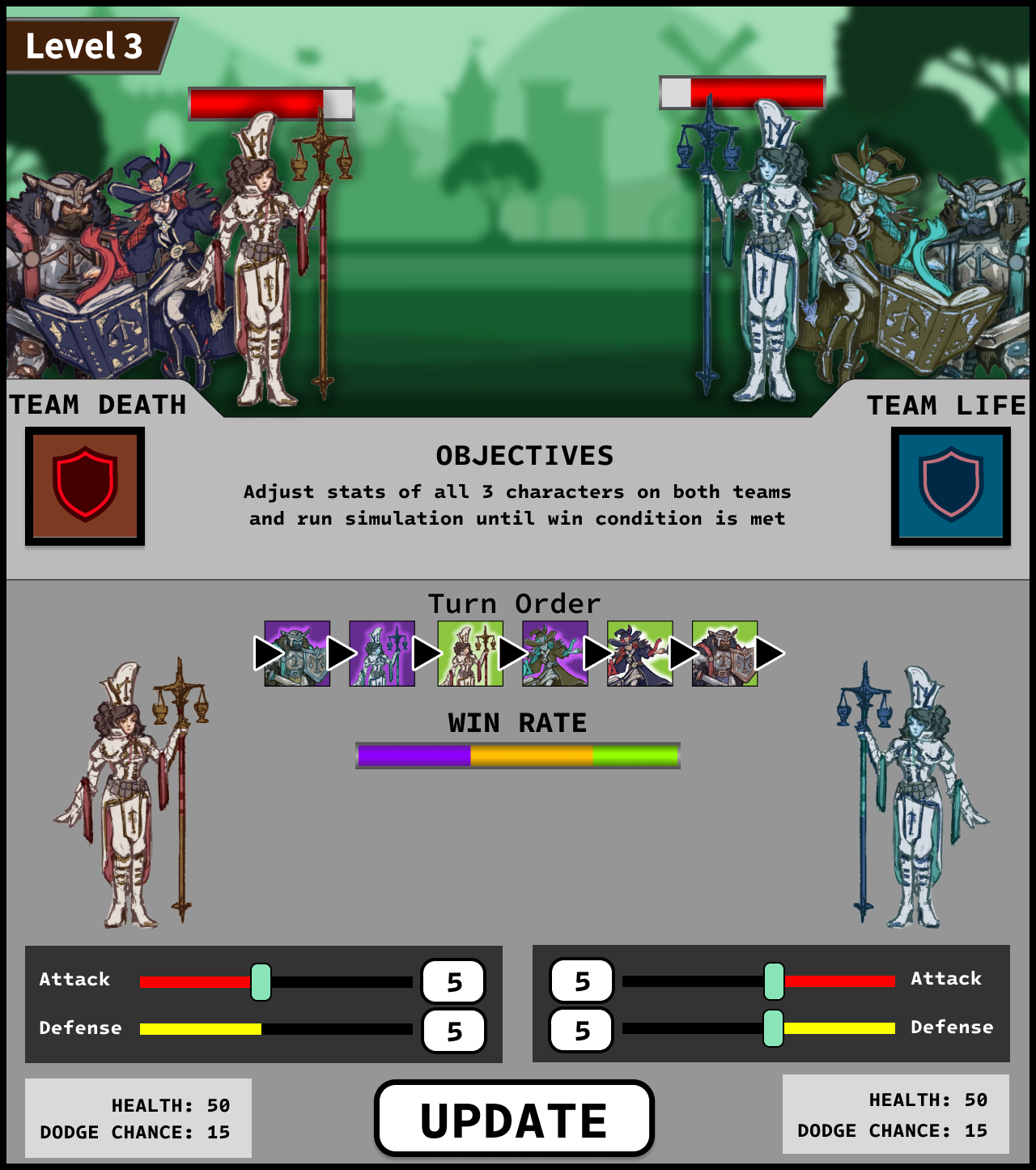
Level 3 Wireframe
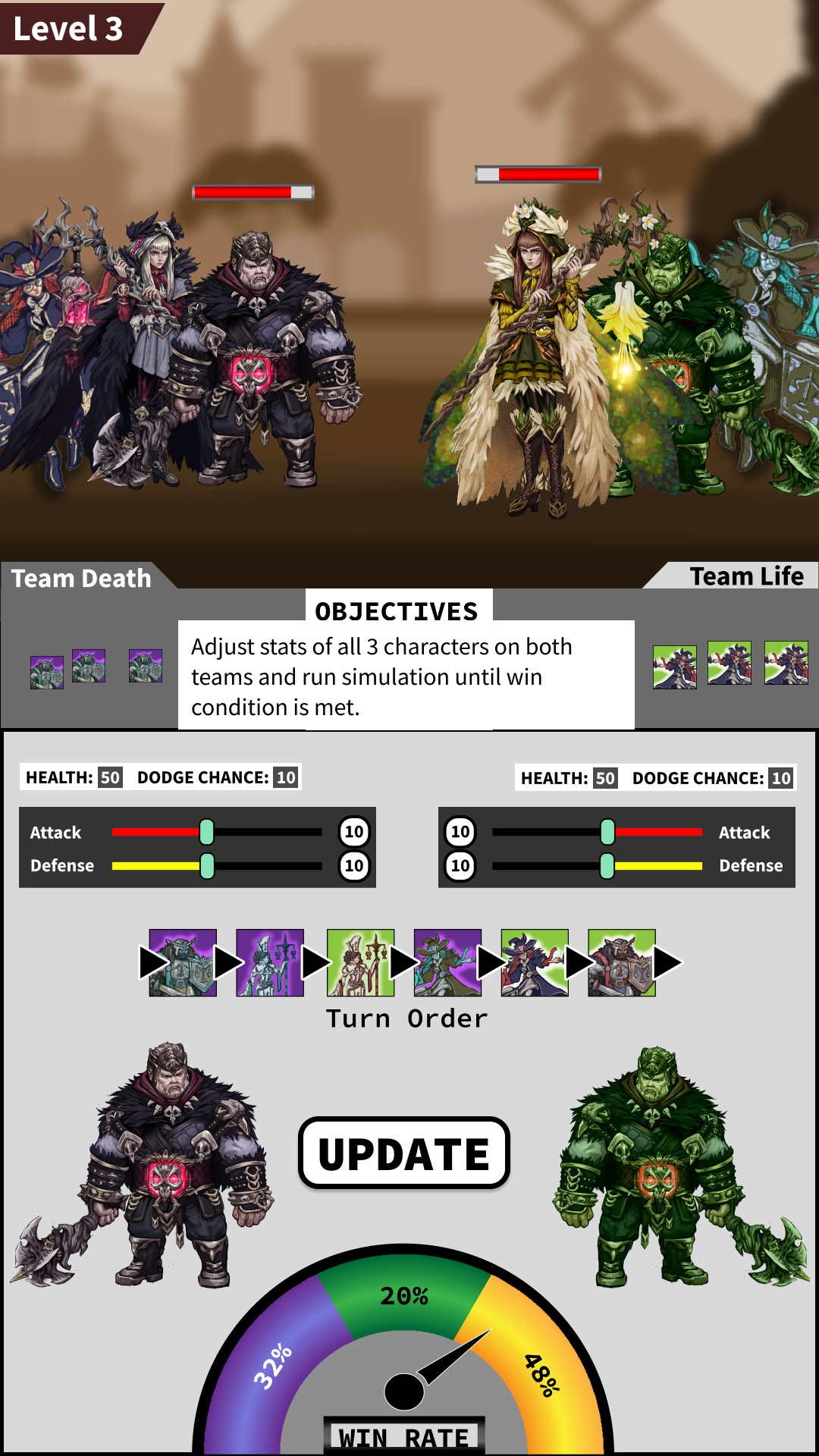
Wireframe vertical Screen Test
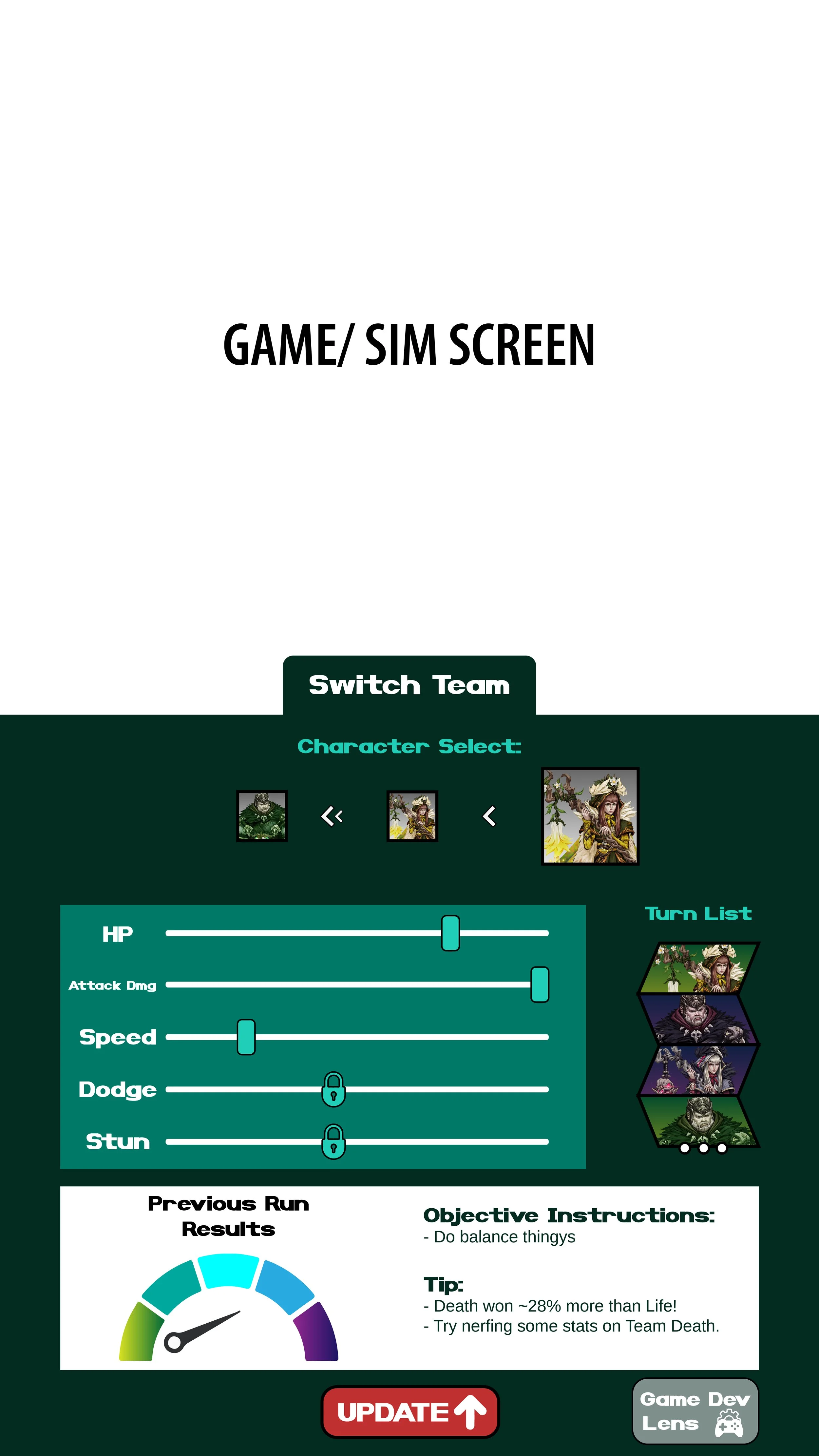
Vertical Wireframe V2
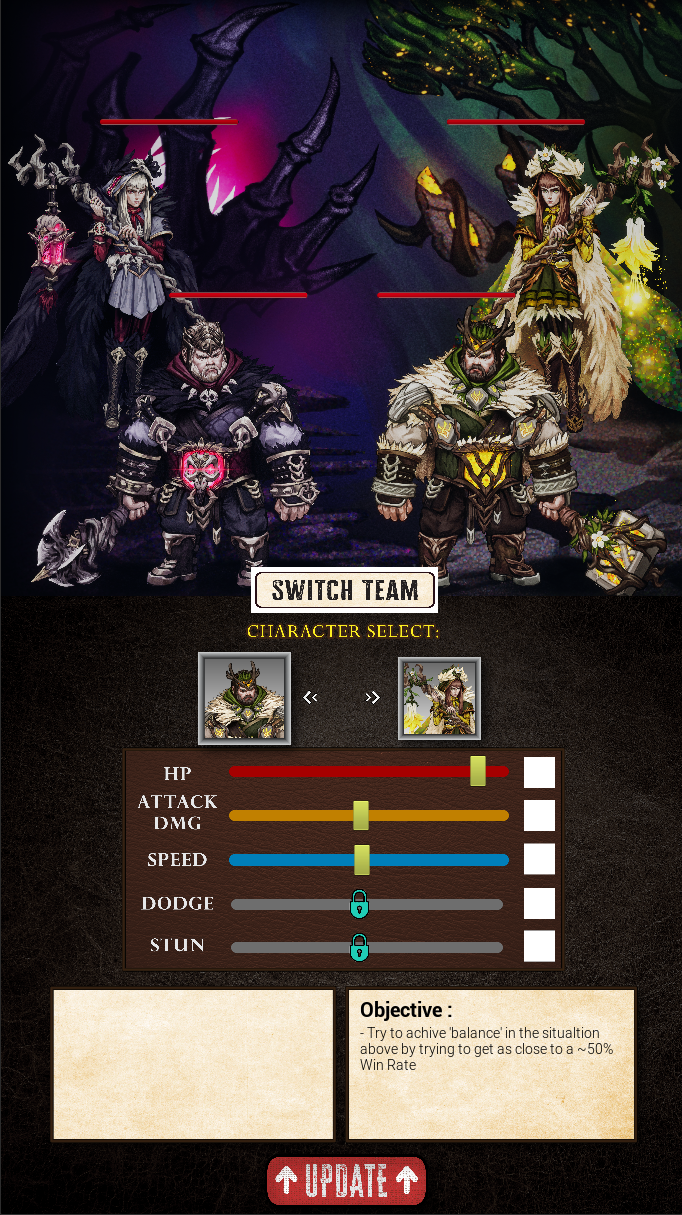
Level 2 Mid-Fi Frame
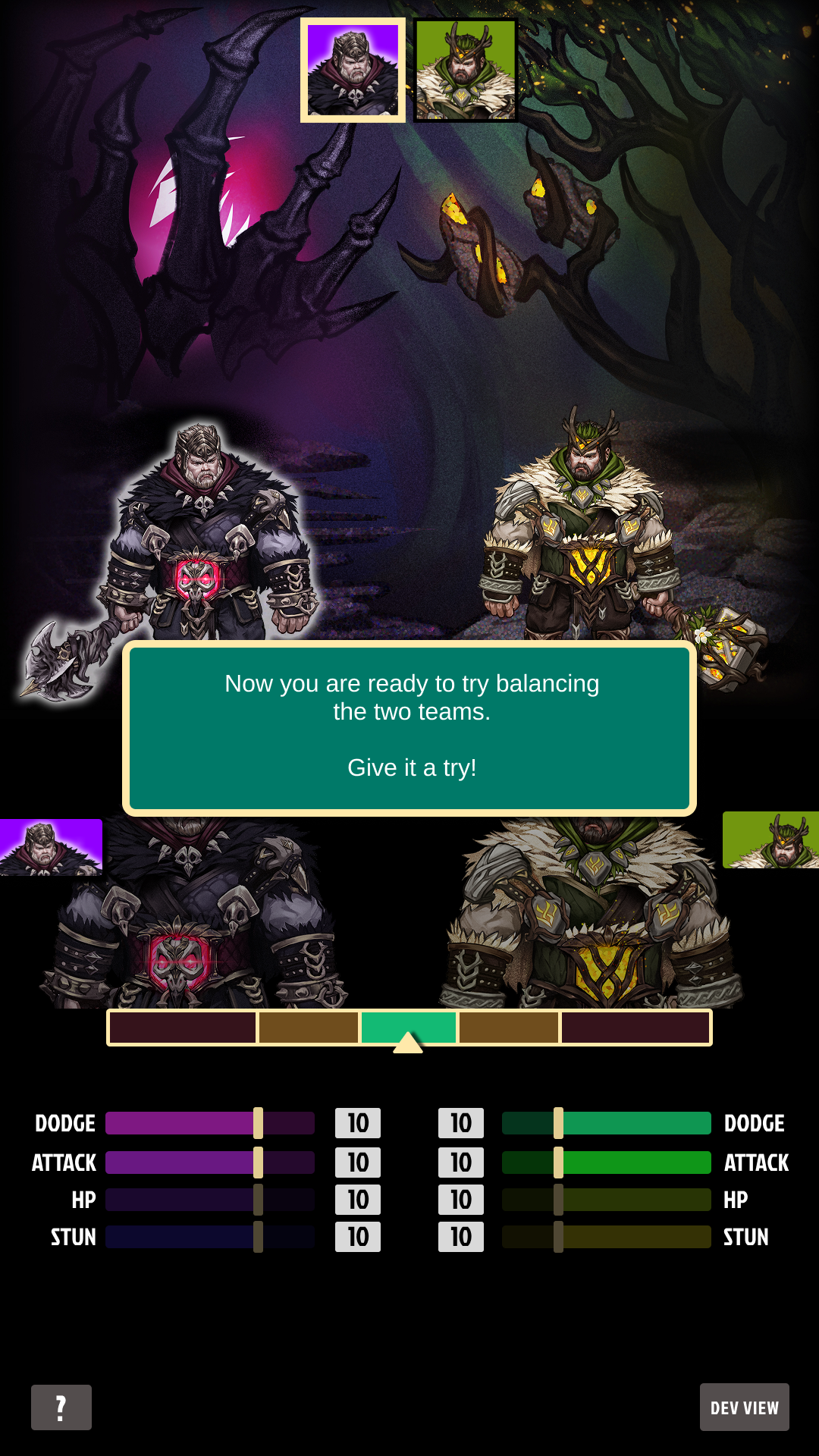
Level 1 Hi-Fi (Tutorial)
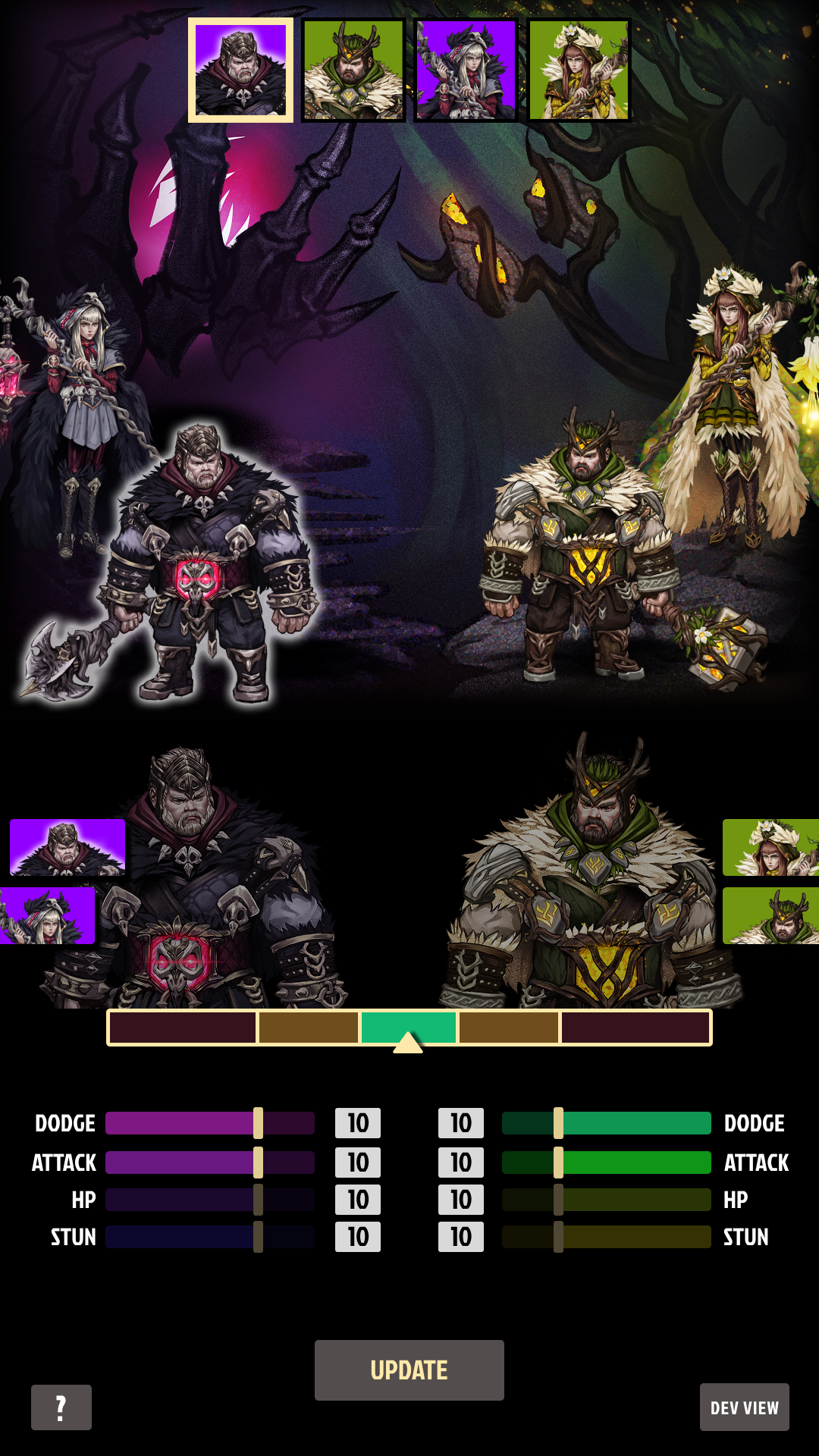
Level 2 Hi-Fi
The Final Boss Battle
The final weeks were a grueling uphill climb for all of us, refining the game design and polishing our product for maximum engagement. We encountered some scope creep and had to scale back our initial plans of 3 levels with 6 characters to 2 levels with 4 characters for the prototype. We also received feedback from the client on our target demographic, and after careful consideration by the team, we decided to remove our 4th persona of the non-gamer Grandmother. The exhibit had started during this time and was drawing in predominantly experienced gamers and people inside the industry. The older, inexperienced player required an extra level of hand-holding in the tutorial that would make seasoned gamers disengage from the exhibit, so we did what was best for the overall experience.
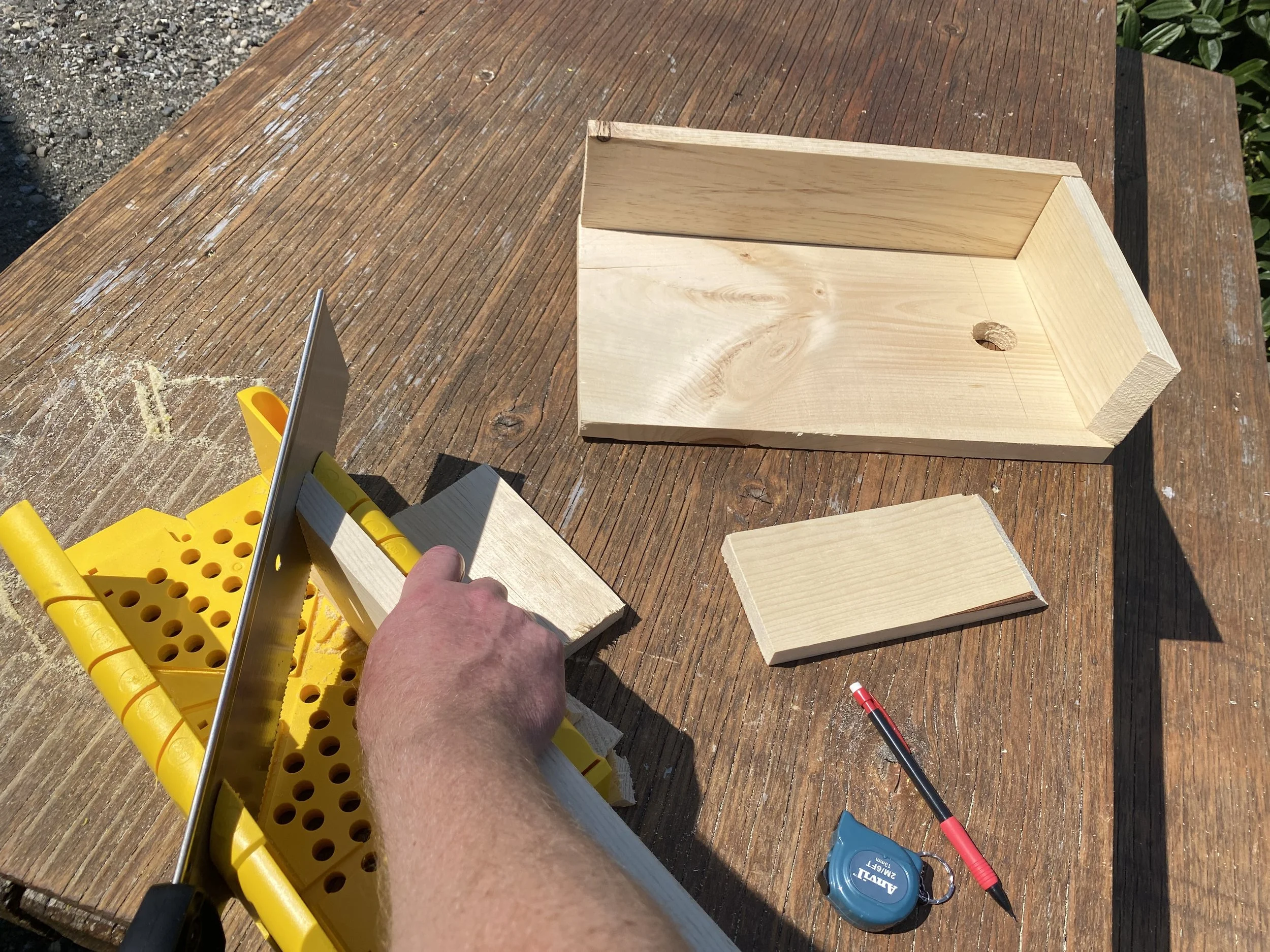
I used my carpentry skills to create a better housing box for the custom controller, with 3D-printed knobs, LEDs, and an acrylic cover.
Final Prioritization Matrix
"Great work overall; it was awesome seeing this project come together."
-Client
Win Screen
In the end, we all pulled together to create something special that impressed our client. I am really proud of what we accomplished in the time we had, and we all met our individual learning goals. The museum was so delighted with the prototype that they are finishing development so it can be installed in their current exhibit at the Museum of Vancouver. I really enjoyed crafting this unique experience with a diverse group of artists, developers, and designers. Some of us got along so well that we are working on a new game project together with a new team!